Videha Digital Research Archive

SOURCE-CONTROLLED MITHILA–VAJJI–ANGA RESEARCH ARCHIVE

Research gateway to Mithila, Vajji and Anga

This is the English entrance to the Videha research archive for the connected histories, genealogy, Panji, literature, philosophy, texts, places and chronology of Mithila, Vajji and Anga across India and Nepal.

The interface is English. Source titles, quotations and other philologically significant forms remain in their original language where preserving them is necessary for scholarly use.

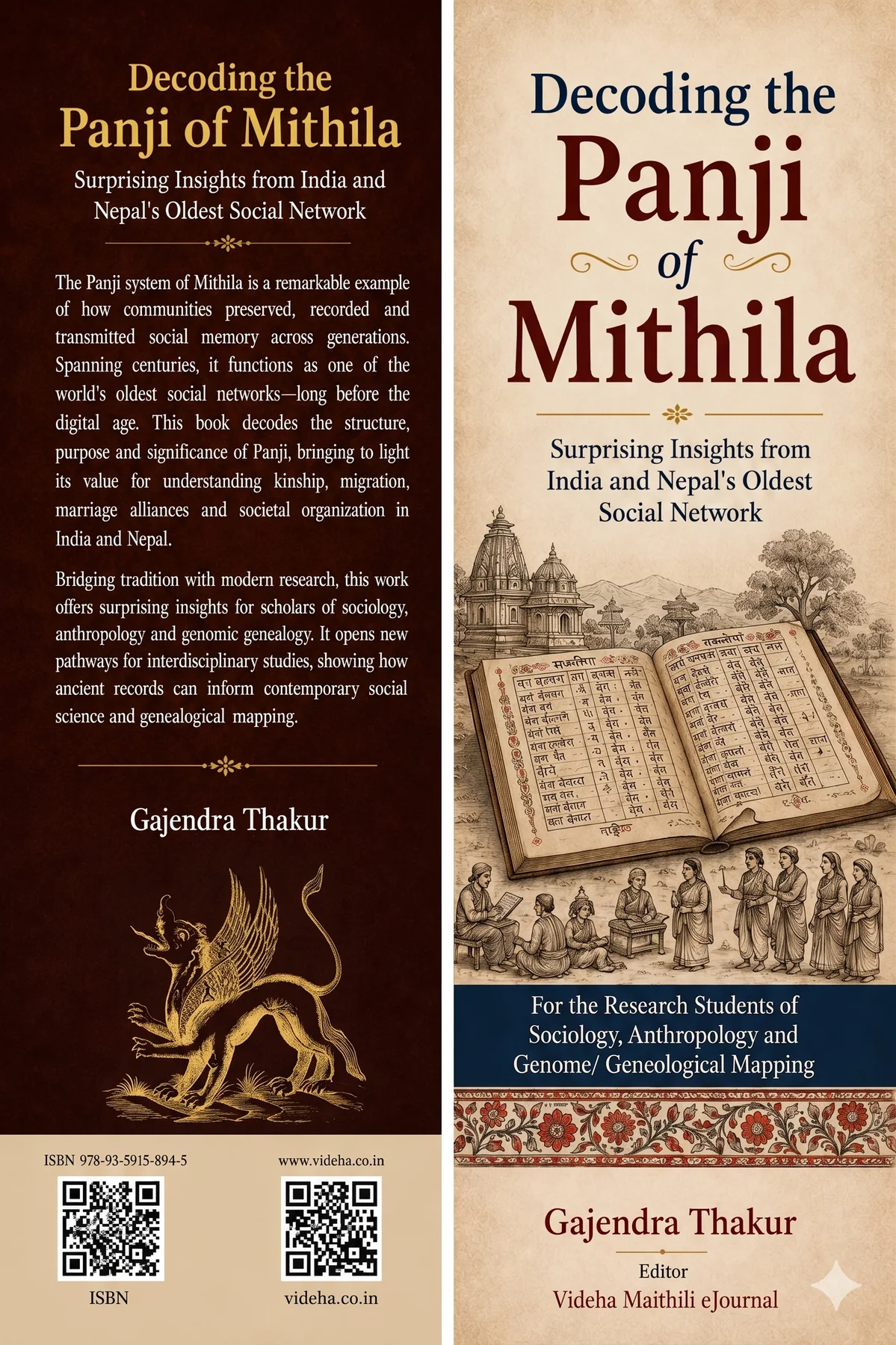
Decoding the Panji publication artwork

FEATURED RESEARCH GATEWAY · DECODING PANJI

Decoding Panji · Volumes I–VI

All 247 source-verified formal chapters across the six volumes are available as permanent HTML pages. Every chapter has its own canonical URL, source citation and source-PDF page locator.

Governing rule: one formal book chapter equals one HTML page. Front matter, part headings, appendices, annexures and other book apparatus do not create extra chapter pages.

6 volumes247 permanent chapter routes
247chapter pages
Volume I20 chapter pages · 1–20Show chapters
Chapter 1: Genome Mapping of Mithila: The Pañjī System — Genealogical Theories Study (Volume I)PDF pp. 8-26 · global chapter 1Chapter 2: Mithila's Pañjī-Prabandha: Genealogical Theories Study (Volume II)PDF pp. 26-47 · global chapter 2Chapter 3: The Panji Prabandh of Mithila: Genomic Mapping, Theoretical Frameworks, and Socio-Historical TrajectoriesPDF pp. 47-62 · global chapter 3Chapter 4: Analytico-Genetic Report on the Mithila Panji Prabandh: Socio-Historical Evolution, Taxonomic Structure, and Matrimonial AlgorithmsPDF pp. 63-76 · global chapter 4Chapter 5: The Socio-Genetic Architecture of Mithila: An Exhaustive Anthropological and Historical AnalysisPDF pp. 76-95 · global chapter 5Chapter 6: The Mithila Panji Prabandha: An Anthropological, Legal, and Socio-Historical AnalysisPDF pp. 95-107 · global chapter 6Chapter 7: Panji Prabandh: A Comprehensive Briefing and Study Guide to Maithil Genealogical MappingPDF pp. 107-110 · global chapter 7Chapter 8: Special Studies: Q&A; Women in the Pañjī; Dooshan Pañjī and the Political Economy of StatusPDF pp. 144-199 · global chapter 8Chapter 9: Prācīn Pañjī, Khaṇḍa 1: Villages, Families, Lineages, and Gotras (Pages 1–65)PDF pp. 200-217 · global chapter 9Chapter 10: Prācīn Pañjī, Khaṇḍa 1 Continued (Pages 66–347): Villages, Lineages, and Marriage ColophonsPDF pp. 217-236 · global chapter 10Chapter 11: Prācīn Pañjī, Khaṇḍa 2 (Pages 348–690): Royal Records, Scholarly Titles, and ModernityPDF pp. 236-253 · global chapter 11Chapter 12: Mithila's Living Genome: Pañjī Prabandha Volume I — Section 2 (Uṭīp Sub-Commentary)PDF pp. 253-272 · global chapter 12Chapter 13: Genome Mapping Volume I: Analytical Report on Mithilak Pañjee PrabandhaPDF pp. 272-293 · global chapter 13Chapter 14: Pampilā Pañjī, Khaṇḍa 3 — Nāgarāma: Comprehensive Analytical Report (Volume I)PDF pp. 293-313 · global chapter 14Chapter 15: Pampilā-Varga Pañjikā, Khaṇḍa 3 (Nagramī): Entries 226–358 (Volume I)PDF pp. 313-333 · global chapter 15Chapter 16: Pañjī Prabandha, Khaṇḍa 3 (Nagramā): Blocks 359–466 (Volume I)PDF pp. 333-350 · global chapter 16Chapter 17: Panji Prabandha of Mithila: Genealogical Mapping (450 AD – 2009 AD), Comprehensive Research ReportPDF pp. 351-366 · global chapter 17Chapter 18: The Dooshan Pañjī of Mithila: A Comprehensive Scholarly ReportPDF pp. 367-388 · global chapter 18Chapter 19: Dūṣaṇa Pañjī — The Black Book: A Complete Study from Genealogical TheoriesPDF pp. 388-404 · global chapter 19Chapter 20: Dooshan Panji: An Interdisciplinary Research Report through Anthropological, Sociological, and Genealogical LensesPDF pp. 404-420 · global chapter 20
Volume II38 chapter pages · 21–58Show chapters
Chapter 1: The Panji as Memory, Record, and Social MapPDF pp. 5-17 · global chapter 21Chapter 2: What “Prachin Panji” ContainsPDF pp. 17-30 · global chapter 22Chapter 3: Why the Panji Is Difficult to ReadPDF pp. 30-42 · global chapter 23Chapter 4: The Basic Unit of a Panji EntryPDF pp. 42-55 · global chapter 24Chapter 5: Key Relationship WordsPDF pp. 55-70 · global chapter 25Chapter 6: Village Formulae and Settlement MarkersPDF pp. 70-82 · global chapter 26Chapter 7: Reading “सन्तति” and “अपत्य”PDF pp. 82-92 · global chapter 27Chapter 8: Reading “सँ” in the PanjiPDF pp. 92-103 · global chapter 28Chapter 9: Reading Numbers in ParenthesesPDF pp. 103-116 · global chapter 29Chapter 10: Abbreviations and TitlesPDF pp. 116-128 · global chapter 30Chapter 11: The Paternal LinePDF pp. 128-140 · global chapter 31Chapter 12: The Maternal Line: मातृक चक्रPDF pp. 140-151 · global chapter 32Chapter 13: Marriage RecordsPDF pp. 151-163 · global chapter 33Chapter 14: Daughter’s-Son and Affinal LinksPDF pp. 163-173 · global chapter 34Chapter 15: Multiple Marriages and Secondary LinksPDF pp. 173-184 · global chapter 35Chapter 16: The Village Universe of Prachin PanjiPDF pp. 185-196 · global chapter 36Chapter 17: Village Clusters and MigrationPDF pp. 196-206 · global chapter 37Chapter 18: डीह, वासी, मूलग्राम, and Local IdentityPDF pp. 206-216 · global chapter 38Chapter 19: Scholars, Poets, Priests, and SpecialistsPDF pp. 216-226 · global chapter 39Chapter 20: Panji as Literary HistoryPDF pp. 226-237 · global chapter 40Chapter 21: Panji as Social StructurePDF pp. 237-247 · global chapter 41Chapter 22: Panji and TimePDF pp. 247-258 · global chapter 42Chapter 23: How to Decode One Entry: A DemonstrationPDF pp. 258-270 · global chapter 43Chapter 24: How to Decode a Village ClusterPDF pp. 270-281 · global chapter 44Chapter 25: How to Decode a मातृक चक्रPDF pp. 281-292 · global chapter 45Chapter 26: How to Decode a Marriage EntryPDF pp. 292-303 · global chapter 46Chapter 27: How to Decode a Long Dense PassagePDF pp. 303-315 · global chapter 47Chapter 28: Creating a Panji Family TreePDF pp. 315-325 · global chapter 48Chapter 29: Creating a Village IndexPDF pp. 325-336 · global chapter 49Chapter 30: Creating a Person IndexPDF pp. 336-349 · global chapter 50Chapter 31: Creating a Term GlossaryPDF pp. 349-362 · global chapter 51Chapter 32: Errors, Variants, and Editorial DisciplinePDF pp. 362-373 · global chapter 52Chapter 33: Volume II and the Khand 1 Index ProtocolPDF pp. 476-478 · global chapter 53Chapter 34: Khand 1 Master Structure and Chapter Link MapPDF pp. 478-479 · global chapter 54Chapter 35: गोत्र, मूल, मूलग्राम: Index-Wise DecodingPDF pp. 479-481 · global chapter 55Chapter 36: लौकित, चौगोला, श्रेणी, and पत्रांक RecordsPDF pp. 481-489 · global chapter 56Chapter 37: विद्वान, गुरु-शिष्य, गोत्र-प्रवर, and बीजी पुरुष Records A. Abbreviation block from the Khand 1 index  सँ - मूलक परिचायकPDF pp. 489-495 · global chapter 57Chapter 38: Khand 1 Gramaarambh Coverage ChecklistPDF pp. 495-522 · global chapter 58
Volume III32 chapter pages · 59–90Show chapters
Chapter 1: The Panji as Memory, Map, and Social RecordPDF pp. 8-18 · global chapter 59Chapter 2: What Is Uptip?PDF pp. 18-27 · global chapter 60Chapter 3: How to Read a Panji EntryPDF pp. 27-35 · global chapter 61Chapter 4: Symbols, Abbreviations, and FormulaePDF pp. 35-45 · global chapter 62Chapter 5: The Time Frame: 450 A.D. to 2009 A.D.PDF pp. 45-57 · global chapter 63Chapter 6: Villages as Genealogical AnchorsPDF pp. 57-66 · global chapter 64Chapter 7: Migration and Marriage RoutesPDF pp. 66-82 · global chapter 65Chapter 8: Titles, Scholarship, and Status Index Link BoxPDF pp. 82-94 · global chapter 66Chapter 9: Entries 1-14 - The Sarisab-Pahitola-Ujan-Durgaganj Opening Cluster Index Link Box Index cluster: सरिसब / खांगुड़ / सकु री / पाहीटोल / उजान, with later movement towardPDF pp. 94-112 · global chapter 67Chapter 10: Entries 15-24 - Badhiyam, Parvapalli, Rupouli, and Related Branches Index Link Box Index cluster: वढ़ियाम / पर्वपल्ली / रूपौली, with transitional support from जोंकी-सरिसब andPDF pp. 112-128 · global chapter 68Chapter 11: Entries 25-40 - Sarisab, Bhaduar, Chapahi, Soderpur, Lalganj, and Ramnagar Index Link Box Index cluster: सरिसब / भदुआर / चपाही / सोदरपुर / बेहट / लालगंज / तारनगर / रामनगरPDF pp. 128-146 · global chapter 69Chapter 12: Entries 41-51 - Digaunth, Gangoli, Navtol, Batouri, Bairi, Bhattpura, and Kachhua Index Link BoxPDF pp. 146-159 · global chapter 70Chapter 13: Entries 52-58 - Kanhauli, Ujan, Mangrauni, Mani, Sarisab, and Bhattpura Index Link BoxPDF pp. 159-173 · global chapter 71Chapter 14: Entries 59-61 - Hati, Teterihar, Soderpur, Sarisab, and Mahiya Index Link BoxPDF pp. 173-184 · global chapter 72Chapter 15: Entries 62-78 - Mahishi, Pali, Ishahpur, Gangoli, Hatadh, Lohna, Pahitola, and Mangrauni Index Link Box Index cluster: महिषी / पाली / इशहपुर / गंगोली / हटाढ़ / लोहना / पाहीटोल / मंगरौनी /PDF pp. 184-198 · global chapter 73Chapter 16: Entries 79-99 - Balirajpur, Pahitola, Haripur, Bhattpura, Behat, Nagwar, Ghosaut, and Dharampur Index Link Box Index cluster: बलिराजपुर / पाहीटोल / हरिअम्ब / हरिपुर / भट्टपुरा / बेहट / नगवाड़ / घोसौत /PDF pp. 198-209 · global chapter 74Chapter 17: Entries 100-119 - Ruchouli and the Puwaripar/Fawaripar Expansion Index Link Box Index cluster: रूचौली / पुवारिपार / फवारिपार / उजान / करमहा / नरूआड़-नडुआर / दुर्गागंज /PDF pp. 209-216 · global chapter 75Chapter 18: Entries 120-146 - Behat, Tarauni, Anilpur, Gangora, Dumra, Simarwad, Parhat, Ujan, Sharadapur, and Ishahpur Index Link BoxPDF pp. 216-225 · global chapter 76Chapter 19: Entries 147-158 - Ratauli, Lohna, Shuklarahi, Gangoli, Najira, Betia, and Ujan Index Link Box Index cluster: रतौली / दरिहरा / लोहना / शुक्लाराही / गंगोली / नजीरा / रानीफर / बेतिया /PDF pp. 225-232 · global chapter 77Chapter 20: Entries 159-178 - Rajoura, Rampur, Lohna, Sihauli, Ishahpur, Raima, Gerki, Chanaur, and Lalganj Index Link Box Index cluster: रजौरा / रामपुर / लोहना / सिहौली / इशहपुर / रै मा / गेरकी / चणौर / पतनुका /PDF pp. 232-240 · global chapter 78Chapter 21: Entries 179-195 - Madari, Sharadapur, Sulhani, Manglabani, Raima, Naduar, Naruar, Behat, and Navtol Index Link BoxPDF pp. 240-248 · global chapter 79Chapter 22: Entries 196-207 - Tripurauli, Pude-Naruan, Mahrail, Koilkhaha, Dharampur, Phulgama, Gangoli, Khokha, Purnia, and Sotipura Index Link BoxPDF pp. 248-255 · global chapter 80Chapter 23: Entries 208-214 - Loam, Sauria, Durgaganj, Bhakharouli, Kanhauli, Ruchouli, and Katihar Index Link Box Index cluster लोआम / सुरगन / सौरिया / दुर्गागंज /PDF pp. 255-262 · global chapter 81Chapter 24: Entries 215-224 - Khandbala, Bhaur, Rajgram, Hemnagar, Deodhi, Shubhankarpur, Uchouri, Garhbaneli, and Dhanoulia Index Link BoxPDF pp. 262-269 · global chapter 82Chapter 25: Full Glossary of Panji Terms Index Link Box Part Part IV - Tools for the ReaderPDF pp. 269-280 · global chapter 83Chapter 26: Abbreviation and Number-Key Index Link Box Part Part IV - Tools for the ReaderPDF pp. 280-288 · global chapter 84Chapter 27: Place Index Index Link Box Part Part IV - Tools for the ReaderPDF pp. 288-303 · global chapter 85Chapter 28: Personal Name Index Index Link Box Part Part IV - Tools for the ReaderPDF pp. 303-315 · global chapter 86Chapter 29: 6 Do not merge on name Identical names must alone. remain separate until relationPDF pp. 315-326 · global chapter 87Chapter 30: How to Reconstruct a Family Line from the Uptip Part Part IV - Tools for the ReaderPDF pp. 326-333 · global chapter 88Chapter 31: Limits, Gaps, and Editorial Principles Part Part IV - Tools for the ReaderPDF pp. 333-339 · global chapter 89Chapter 32: Conclusion: The Panji as a Civilization Archive Part Part IV - Tools for the ReaderPDF pp. 339-343 · global chapter 90
Volume IV87 chapter pages · 91–177Show chapters
Chapter 1: Entering the Nagram Panji: What This Volume DecodesPDF pp. 11-22 · global chapter 91Chapter 2: The Language of the Panji: Terms, Abbreviations, and Formulae The Nagram Panji cannot be understood merely byPDF pp. 23-35 · global chapter 92Chapter 3: The Logic of “From Village to Village”PDF pp. 36-47 · global chapter 93Chapter 4: Persons, Titles, and Social Roles in the Nagram PanjiPDF pp. 48-61 · global chapter 94Chapter 5: Reading Gaps, Blanks, and “Rikta”PDF pp. 62-74 · global chapter 95Chapter 6: Sandahpur to Singhwar: The Opening Genealogical FramePDF pp. 75-91 · global chapter 96Chapter 7: The Aankhi-Lal-Gunakar-Udan-Gangesh LineagePDF pp. 92-106 · global chapter 97Chapter 8: Girdhari, Abadh Bihari, Gopal, Teknarayan, and the Expansion of the Singhwar BranchPDF pp. 107-122 · global chapter 98Chapter 9: Shashipur as a Secondary CentrePDF pp. 123-136 · global chapter 99Chapter 10: The Shashipur-Pindaruch and Shashipur-Survana BranchesPDF pp. 137-150 · global chapter 100Chapter 11: Shashipur Later Branches and Modernizing NamesPDF pp. 150-162 · global chapter 101Chapter 12: Sandahpur to Katka: The First Post- Shashipur ExpansionPDF pp. 163-175 · global chapter 102Chapter 13: Banailli, Purnea, Badhwas-Sarisab, Rahua, and the Empty Boundary: Entries (15)-(19)PDF pp. 176-187 · global chapter 103Chapter 14: Khangur to Nahar, Danga, Pilkhwar, and the First Khangur Expansion: Entries (20)-(24)PDF pp. 188-199 · global chapter 104Chapter 15: Pilkhwar, Bhatsimri, Ranitole and the Later Khangur ExpansionPDF pp. 200-206 · global chapter 105Chapter 16: Khangur to Pilkhwar, Yamsam and Dihiya: The Transition from Branch Genealogy to Modern MemoryPDF pp. 207-213 · global chapter 106Chapter 17: Khangur-Dihiya Continuations and the Kailakh-Kakraud Turn: Entries (35)-(40)PDF pp. 213-220 · global chapter 107Chapter 18: Khangur to Yamsam, Kakraud, Saurath, and the Noane-Gopinath ContinuationPDF pp. 221-229 · global chapter 108Chapter 19: Khangur, Khojpur, Pilkhwar, Kailakh, and the Transition to SakuriPDF pp. 229-236 · global chapter 109Chapter 20: Sakuri, Sarisab-Sakuri, and the Badhiyam-Parvapalli BranchesPDF pp. 237-245 · global chapter 110Chapter 21: Badhiyam after Saurath: Navani, Chanpura, Shashipur, Tedhra, Jagati, Rajey, and Sakuri-Gangoli Chapter 20 ended with the Badhiyam-Parvapalli linePDF pp. 246-253 · global chapter 111Chapter 22: Sakuri-Gangoli, Bhadgam, Damodarpur, Ramnagar-Khajuri, and Jamuni-Ehu Chapter 21 brought the Badhiyam-Parvapalli materialPDF pp. 254-263 · global chapter 112Chapter 23: Jamuni, Pachahi, Kanhauli, and Mahiya: From the Jajival Register to the Soderpur-Kanhauli and Mahiya LinesPDF pp. 264-274 · global chapter 113Chapter 24: Hasauli, Hati, Digaun, Raiyam, and the Return to Sarisab: Soderpur Registers after MahiyaPDF pp. 275-286 · global chapter 114Chapter 25: Sarisab, Gaur, Bali, Jagaur, and Khori: Soderpur Registers before SukhetPDF pp. 287-295 · global chapter 115Chapter 26: Sukhet, Katka, and Rohar: Soderpur Registers from Lagama to KachhuwaPDF pp. 296-305 · global chapter 116Chapter 27: Pachadhi, Kodariya, Sakuri, Phuldaha, Parhi, Haripur, Samaya, and JamdauliPDF pp. 306-316 · global chapter 117Chapter 28: Jamdauli to Dath and the Mahishi-Pali Register: Entries (207)- (220)PDF pp. 317-322 · global chapter 118Chapter 29: Mahishi to Dath and the Mangrauni-Madari Continuation: Entries (221)-(229)PDF pp. 323-328 · global chapter 119Chapter 30: Hati-Pali and Samauli-Pali: From Satlakha and Pilkhwar to Sanha, Jhanjharpur and BagahiPDF pp. 329-334 · global chapter 120Chapter 31: Balirajpur-Hariamb and Siva-Hariamb: Settlements, Scholarly Lines and Marriage Networks, Entries (248)- (265)PDF pp. 335-345 · global chapter 121Chapter 32: Mangrauna, Ahil, and Rakhwari under the Hariamb Line: Descent, Titles, and Marriage CircuitsPDF pp. 346-355 · global chapter 122Chapter 33: Akusi-Tankwal, Gandauli-Jalay, and the Opening Nagwad-Ghusaut RegisterPDF pp. 356-364 · global chapter 123Chapter 34: Nagwad-Ghusaut after Akaur: Bhachhi, Ranipur, Samaul, Masuriya, and KakraudPDF pp. 365-371 · global chapter 124Chapter 35: Nagwad-Ghusaut Continued: Bhatsimari, Chapahi, Kaivalakh, Satlakha, and the Turn to Ananlpur-KarmahaPDF pp. 371-379 · global chapter 125Chapter 36: Nagwad to Pilkhwar and Rashadh, then Analpur-Karmaha before TarouniPDF pp. 380-388 · global chapter 126Chapter 37: Tarouni-Karmaha: Ramnagar, Kaivalakh, Pindaruch, Virsayar, Nanour, and the Aama-Bounsi ExtensionPDF pp. 389-394 · global chapter 127Chapter 38: Naduar-Karmaha: Tharhi, Bharam, Kachhuwa, and the Scholarly Naduar BranchesPDF pp. 395-403 · global chapter 128Chapter 39: Behat-Karmaha, Majhaura- Karmaha, and Majhiyam-Karmaha: Entries (336)-(343)PDF pp. 404-412 · global chapter 129Chapter 40: Mahishi-Budhwal: Kailakh, Kachhuwa, Pokhrauni, Bhainsdiyar, and Parihari: Entries (344)-(351) Coverage. This chapter begins exactly where Chapter 39PDF pp. 413-421 · global chapter 130Chapter 41: Pariyam, Gangaura, and Dumra: Budhwal Continuities, Entries (352)- (358)PDF pp. 422-430 · global chapter 131Chapter 42: Vichadhi, Kua-Tisaut, Parhat-Baheradhi, Chanpura-Parihari, Malichham-Bhachhi, and Mangrauni-Khanam-Phandah, Entries (359)- (370)PDF pp. 431-441 · global chapter 132Chapter 43: Khojpur, Mangrauni, Pilkhwar and the Khanam- Phandah Learned Branch: Entries (371)-(382) This chapter resumes exactly where the previous chapter stopped. Entry (370) had opened the Khanam-PhandahPDF pp. 442-450 · global chapter 133Chapter 44: Rajgram-Alay, Rashadh, Pilkhwar-Baligarh and Lagma: Entries (383)-(387)PDF pp. 451-457 · global chapter 134Chapter 45: Baigani-Alay and the Baneli- Ramgarh Royal ClusterPDF pp. 458-465 · global chapter 135Chapter 46: Paramgarh-Alay and Pindaruch: The Shyamlal, Akshaylal, Harikant, and Bechanlal Lines This chapter begins with entry (392), exactly where thePDF pp. 466-474 · global chapter 136Chapter 47: Paramgarh, Babhaniam, Satlakha, Oini, Simraungarh, and Mahua-KhaualPDF pp. 475-481 · global chapter 137Chapter 48: Cutka-Soderpur, Tarouni, and Ranti-Pilerwad: Jatadhar Jha, Khadik-Khaual, and the Pilerwad ContinuationsPDF pp. 482-488 · global chapter 138Chapter 49: Simarwad-Khaual, Ahil-Gotham, Mahnaura-Bindhi, and Damodarpur-KakraudPDF pp. 489-497 · global chapter 139Chapter 50: Kaivalakh-Nahas-Khaual and the Bharam Continuation: Entries (420)- (422)PDF pp. 498-503 · global chapter 140Chapter 51: Manikouli, Nahas-Kaivalakh, and Nahas-Dhamdaha: Entries (423)- (428)PDF pp. 504-510 · global chapter 141Chapter 52: Chanpura and Basaith: Nahas- Khaual Continuities, Entries (429)- (432) This chapter takes up the next compact unit after thePDF pp. 511-517 · global chapter 142Chapter 53: Basaith, Baghdas-Chanpura, Nahas-Chanpura, Khojpur, and MahinathpurPDF pp. 518-526 · global chapter 143Chapter 54: Sukhait-Pilkhwar and the Learned Khaual Line: Entries (447)-(450) This chapter takes up the sequence after the suspendedPDF pp. 527-532 · global chapter 144Chapter 55: Nahar and Parhat-Sakararhi: From Tharhi-Satlakha to Teldihā-Munger, Entries (451)-(460)PDF pp. 533-542 · global chapter 145Chapter 56: Hadari-Sakararhi, Batsar-Munger, Lohna-Sakararhi and Rohar-Haripur: Entries (461)-(466)PDF pp. 543-551 · global chapter 146Chapter 57: Rohar-Jhanjharpur, Tatail- Sakararhi and Chhamu-Sakararhi: Entries (467)-(474) This chapter begins a new source file after the Rohar-PDF pp. 552-558 · global chapter 147Chapter 58: Bhakhrauli-Ramnagar and the Rajanpura Cluster: Entries (475)-(485)PDF pp. 559-571 · global chapter 148Chapter 59: Rajanpura-Kaivalakh, Shivipatti, Kanhouli, Navani, Ratauli, and Bhatsimari-Tharhi: Entries (486)-(497)PDF pp. 572-579 · global chapter 149Chapter 60: Ratauli-Dhadhi, Dih-Darihara, Bargam-Pilkhwar, and Sihouli: Entries (498)- (508) Opening notePDF pp. 580-591 · global chapter 150Chapter 61: Rajoura-Sahpur and Rajoura- Tharhi: The Mandar Gramarambh Opening note This chapter begins where the preceding Sihouli-MandarPDF pp. 592-595 · global chapter 151Chapter 62: Rajoura-Pindaruch, Bihnagar-Kakraud, Bagahi- Kakraud, and Pindaschh: Entries (511)-(516)PDF pp. 596-602 · global chapter 152Chapter 63: Barauni, Bhadual, Belaunja, Katouna, and Satauli: Entries (517)- (528) This chapter resumes after the Kakraud-Pindaschh closePDF pp. 603-613 · global chapter 153Chapter 64: Satauli Continuations, Purnia, Jayanand, Virsayar, and Parihari: Entries (529)-(534)PDF pp. 614-621 · global chapter 154Chapter 65: Mahindrapur-Pandua and its Kakarod, Dhagjari, Rashady, Singhwar, Lagama, and Kailakh Branches: Entries (535)-(547) This chapter begins a new major unit under thePDF pp. 622-635 · global chapter 155Chapter 66: Mahindrapur-Shivnagar, Bisfi- Saurath, Kabai, Vatswal, Shaktiraypur and Sagarapur: Entries (548)-(562) Opening notePDF pp. 636-651 · global chapter 156Chapter 67: Ojholi-Sagarapur-Pandoli and the Kapileshwar Pause: Entries (563)-(564)PDF pp. 652-654 · global chapter 157Chapter 68: Bhakhrauli-Kujouli: Chikni- Purnia, Porbarauni and Haripur, Entries (565)-(572) This chapter opens the Bhakhrauli-Kujouli gramarambhPDF pp. 655-662 · global chapter 158Chapter 69: Malangiya-Kujouli: Tharhi, Kakraud, Mahishi, Lagma and Sanha, Entries (573)-(580) This chapter begins the Malangiya-Kujouli gramarambhPDF pp. 663-669 · global chapter 159Chapter 70: Dadri-Panichobh, Nanour- Parasarma, Brahmoli and the Birpur- Panichobh Notice: Entries (581)-(588)PDF pp. 670-677 · global chapter 160Chapter 71: Ruchauli-Ekhara, Oda-Ekhara and Khadka-Ekhara: Entries (589)-(597) This chapter begins after the Dadri-Panichobh andPDF pp. 678-687 · global chapter 161Chapter 72: Kasarauh-Ekhara, Sangram, Nahar-Shahpur and Ratipar-Mahesh: Entries (598)-(600)PDF pp. 688-690 · global chapter 162Chapter 73: Sudsuya-Belaunch: Banu Chhapra, Badhudhpara, Samauli and Tharhi-Sagarpur: Entries (601)-(606)PDF pp. 691-695 · global chapter 163Chapter 74: Kako-Belaunch, Kako-Kailakh, Shivnagar-Banpura, Chanpura-Haripur-Vira- Ekma, Barha Nagram and Satlakha-Visauni- Jhauwa: Entries (607)-(614)PDF pp. 696-703 · global chapter 164Chapter 75: Kako-Babu Chhapra-Dath, Dath- Ekma, Pokhrauni-Tarauni-Pindaruch, Kako- Kailakh-Pindaruch, and Satlakha-Belaunch- Halo: Entries (615)-(620)PDF pp. 704-710 · global chapter 165Chapter 76: Mardari-Baliyas and Sakuri- Baliyas: Entries (621)-(624)PDF pp. 711-716 · global chapter 166Chapter 77: Narsam-Baliyas Opening: Entries (625)-(629)PDF pp. 717-722 · global chapter 167Chapter 78: Narsam-Padna-Harinagar, Lalbag and Pindaruch: Entries (630)-(638)PDF pp. 723-728 · global chapter 168Chapter 79: Narsam: Dharmanath, Gunakar, Shalampur, Tabhka and Nagaram-Nahar: Entries (639)-(649)PDF pp. 729-734 · global chapter 169Chapter 80: Narsam: Kaivlarav, Kakraud, Ranitol, Saurath and Sukhsena: Entries (650)- (664)PDF pp. 735-740 · global chapter 170Chapter 81: Baruwari-Baliyas: Nandishwar Invocation and Empty Closing Entries: Entries (665)-(668)PDF pp. 741-743 · global chapter 171Chapter 82: Major Lineage Nodes of the Nagram Panji Analytical Summary after the Source-Entry DecodingPDF pp. 744-750 · global chapter 172Chapter 83: Major Village Nodes and Route NetworksPDF pp. 751-752 · global chapter 173Chapter 84: Marriage Networks and Inter- Village AffiliationPDF pp. 753-754 · global chapter 174Chapter 85: Scholars, Priests, Officials, Lawyers, Engineers, Doctors, and Modern ProfessionsPDF pp. 755-756 · global chapter 175Chapter 86: Migration, Memory, and Mithila Beyond MithilaPDF pp. 757-758 · global chapter 176Chapter 87: Problems of Reading: Scribal Variants, OCR-Like Distortions, and Editorial DecisionsPDF pp. 759-760 · global chapter 177
Volume V40 chapter pages · 178–217Show chapters
Chapter 1: How to Read Volume II Panji: Script, Abbreviations, Lineage Logic, and Marriage AuthorityPDF pp. 9-29 · global chapter 178Chapter 2: The Opening Line: Vallal Sen, Mahamahopadhyay Halayudh, and the First Genealogical FramePDF pp. 30-42 · global chapter 179Chapter 3: Phoolsara, Haraut, Pothia Sultanpur, Varadaha, and Majlishpur: Early Branch Expansion After the Halayudh FramePDF pp. 43-55 · global chapter 180Chapter 4: Shiva Hariam, Sandahpur Didhoy, and Danti-ChopraPDF pp. 56-66 · global chapter 181Chapter 5: Mahadev Digdhi, Behat Khandwala-Parbaha, Padmapur, and Pada: Scholarly Branches, Modern Titles, and Expanding Marriage FieldsPDF pp. 67-75 · global chapter 182Chapter 6: Dom Tekari Gram: Jayaditya, Pashupati, Vasudev, Dhirakant, Anantalal, Ram Sundar, and the Learned- Modern ContinuationPDF pp. 76-85 · global chapter 183Chapter 7: Decoded source span and focus:PDF pp. 86-93 · global chapter 184Chapter 8: Tilay Ratanpur-Rabhida-Banaili, Parwaha Asura Sakma: Agaru, Harikar, Banaili Dyodhi, Rai Jahad Singh, Rai Brajraj Singh, Rai Pachkaudi, and the Raj-Branch Marriage NetworkPDF pp. 94-102 · global chapter 185Chapter 9: Badgam Darhiara Asura: Ravikar, Bhakta Kavi Dhanapati, Govardhan, Shulpani, Kalidatt, Durgadatt, Manna Lal, Pranmohan, and the Chopra Bakhari-Tetrihar Sodarpur ContinuationPDF pp. 103-112 · global chapter 186Chapter 10: Decoded source span and focus:PDF pp. 113-113 · global chapter 187Chapter 11: Editorial principlePDF pp. 113-121 · global chapter 188Chapter 12: Editorial principlePDF pp. 121-139 · global chapter 189Chapter 13: Katayi-Anhara Belepothia, Hemnagar: Hingu-Kamal, Matinath, Hira, Chiranjeev, Ugramani, Sundarmani, Devaraj Singh, and the Hemnagar-Khandwala ContinuationPDF pp. 140-147 · global chapter 190Chapter 14: Asura-Suptani Gangoli and Singholi Mandar Danti: Brijmohan, Anand Mohan, Kamal Mohan, Babuji, Jagu, Gangadhar, Harijiv, and the Asura-Andhasur ContinuationPDF pp. 148-154 · global chapter 191Chapter 15: Birwan Batheli: Mahamahopadhyay Batesh, Pashupati, Raghupati,PDF pp. 155-161 · global chapter 192Chapter 16: Badgam Darhiara-Dharmapur Desh Salampur-Salampur-Salempur and Badgam Shalampur: Abhiram, Jay Ram, Raghunath, Santosh, Chandīdatt, Pyarelal, Upendra, Narayandatt, and the Shalampur RegisterPDF pp. 162-171 · global chapter 193Chapter 17: Khaual Simbarwad Gramaramabh: Jahanpur, Jamua-Baradbata, Chikni,PDF pp. 172-180 · global chapter 194Chapter 18: Nasira Desho Dighdi: Bhulek, Keuntu, Bhavanand, Anand, Bhairav, Manmohan, Ramanikant, Pashupatinath, Dharmanand, and the Purnia ModernPDF pp. 181-186 · global chapter 195Chapter 19: Rajanpura Pu Darhiara Koilakh, Sarouni, and Dharmapur- Deshe Hemnagar: Kanhaiya, Dwarikanath, Lakshman, Prayagdatt,PDF pp. 187-195 · global chapter 196Chapter 20: Ratauli Darhiara, Jahanpur, Naili, Shrinagar, Ramai- Rahatmina-Bhadra: Kamalpani, Devdhar, Dharanidhar, the Poet-Line,PDF pp. 196-205 · global chapter 197Chapter 21: Rajora Mandar Nasira- Deshe Phulbadiya-Gondwara: Mahamahopadhyay Batesh, Pashupati, Raghupati, Ratipati, Yagyapati, PothiaPDF pp. 206-213 · global chapter 198Chapter 22: Satlakha-Satauli Gramaramabh: Chakrapani, Prithvidhar, Purushottam, Harikar, Shrikar, Ruchikar, Ratnakar, Maan,PDF pp. 214-219 · global chapter 199Chapter 23: Jagatpur Pu Mandar- Chuna-Chu Pur Pu Belbadi: Nardev, Arjun, Gopal, Harikar, Jagannath, Vishwambhar, Rajora-MandarPDF pp. 220-225 · global chapter 200Chapter 24: Sodarpur Pu Mani Gramaramabh: Vishwanath, Gopinath, Batesh, Pashupati, Rameshwar, Ratnakar, Gondi, Krishn, Yagyapati,PDF pp. 226-230 · global chapter 201Chapter 25: Raiyam Ghoshiyam Gramaramabh: Manbodh, Mangani Ram, Tilaknath, Chandranath, Nasira- Haveli Pokharia, Harimohan,PDF pp. 231-235 · global chapter 202Chapter 26: Sakuri Belauch Gramaramabh: Shivdas, Tivyakara, Keuntu, Purai, Gunakar, Ramkrishna, Devanand, Ratnapati-Jhingur, Gauridatt, Buddhinath, Rajkumar, Vasukinath,PDF pp. 236-240 · global chapter 203Chapter 27: Bhanupunur Pu Panichobh Gramaramabh: Ramdev, Thitho, Jiveshwar, Bhanukar, Chandrakar, Jivdhar, Shrinath, Hingu, Durgadatt, Narayandatt, Gangadhar, Anantram,PDF pp. 241-245 · global chapter 204Chapter 28: Ruchouli Ekhara Gramaramabh: Jyotirvid Harishwar, Gunishwar, Hridayeshwar, Baburaiya, Vyakaran Ramchandra, Shrotriya Gangesh, Rajendra, Dharbharan, Vishwambhar,PDF pp. 246-250 · global chapter 205Chapter 29: Sulhani Naraun Gramaramabh: Mahidhar, Udayakar, Ratnakar,PDF pp. 251-253 · global chapter 206Chapter 30: Tripurau Pu Li Naraun Gramaramabh: Dakra-Dihiya, Vishweshwar, Gaurishwar, Mahamahopadhyay Harishwar, Saraswati Ram,PDF pp. 254-256 · global chapter 207Chapter 31: Nagwad Ghosot Gramaramabh: Vasudev, Divakar, Buddhikar,PDF pp. 257-259 · global chapter 208Chapter 32: Asi Ekhara Gramaramabh: Nasira-Deshe Pada, Vishwanath, Nandan, Bhanjan, Bhairam, Kanhuram, Shambhunath, Kuli,PDF pp. 260-261 · global chapter 209Chapter 33: Gangora Budhwal Gramaramabh: Gondwara-Phulbadiya, Haveli- Radheli, Lotan, Rudra, Rangai, Rameshwar, Shivdatt, Pitambar, Dharanath, Khushi, Domai, Bhola, Rajendra, and the Aamdanda ClosePDF pp. 262-263 · global chapter 210Chapter 34: Badhiyam Pawauli Gramaramabh: Nasira-Haveli Sauria, Ravidatt,PDF pp. 264-265 · global chapter 211Chapter 35: Devhar Devhar Mul-Mu Gramaramabh: Jaykar, Sagar, Matikar,PDF pp. 266-267 · global chapter 212Chapter 36: Shandilya-Gotre Brahmpura Pu Sako(b)ra-Kobara, Masuria- Alay: Delhan, Kanh, Ram, Vishweshwar, Shrinath, Dharmnath, Vidyadhar, Yashodhar, Chintamani, Narhari, Dharmeshwar, Jaydev, Rupnarayan, Harikrishna, Krishnanand, AcharyaPDF pp. 268-271 · global chapter 213Chapter 37: Kanhouli Parwaha: Ruchikar, Anandkar, Mitrakar, Jasai, Rajiv,PDF pp. 271-274 · global chapter 214Chapter 38: Ekhara Sangram Gramaramabh: Dom Tekari, Chaturvedadhyarya Kamdev, Yajnik Parashuram, Shridhar,PDF pp. 274-276 · global chapter 215Chapter 39: Ekhara Sangram Sirsia Gramaramabh: Bhorilal Jha, Choa Lal,PDF pp. 276-279 · global chapter 216Chapter 40: Cross-Analysis, Reference Apparatus, and Consolidated Reading TablesPDF pp. 280-306 · global chapter 217
Volume VI30 chapter pages · 218–247Show chapters
Chapter 1: What Is Panji? The Archive of Mithila’s Social Memory Opening To decode Dushan Panji, one must first understand PanjiPDF pp. 10-18 · global chapter 218Chapter 2: What Is Dushan Panji? The “Black Book” and the Meaning of Dushan OpeningPDF pp. 18-27 · global chapter 219Chapter 3: The Ethics of Decoding: Record, Stigma, and Historical Justice OpeningPDF pp. 27-37 · global chapter 220Chapter 4: The Panji System before Fragmentation Purpose of This ChapterPDF pp. 37-47 · global chapter 221Chapter 5: Harisinghdev, the Panjikars, and the Official Beginning of the SystemPDF pp. 47-58 · global chapter 222Chapter 6: Uthedh, Sapinda, Swajana, and the Logic of Marriage Eligibility OpeningPDF pp. 58-67 · global chapter 223Chapter 7: Gotra, Pravara, Mool, Moolgram: The Grammar of Panji Entries OpeningPDF pp. 67-77 · global chapter 224Chapter 8: The Twenty Gotras and the 167 Mools of Maithil BrahminsPDF pp. 77-87 · global chapter 225Chapter 9: Mool and Migration: How Villages Became Genealogical Memory OpeningPDF pp. 87-97 · global chapter 226Chapter 10: Reading the Dushan Tables: Method for Entries 1–97PDF pp. 97-106 · global chapter 227Chapter 11: Unknown Lineage and “Agyat”: The Social Meaning of the UnknownPDF pp. 106-115 · global chapter 228Chapter 12: Devadasi, Dasi, and Female-Line MemoryPDF pp. 115-124 · global chapter 229Chapter 13: Dalit and Artisan Connections in Dushan PanjiPDF pp. 124-132 · global chapter 230Chapter 14: Muslim and Yavani ConnectionsPDF pp. 132-142 · global chapter 231Chapter 15: Widowhood, Remarriage, and the Hidden Social History of WomenPDF pp. 142-152 · global chapter 232Chapter 16: Gangesha, Tattvachintamani, and the Dushan RecordPDF pp. 152-161 · global chapter 233Chapter 17: Anandaa, Vallabha, Medha, Hira, Rahmu, Sohaago: Named Women and Hidden MothersPDF pp. 161-172 · global chapter 234Chapter 18: Entry-by-Entry Decoding: Cases 1-25 Purpose of This ChapterPDF pp. 172-188 · global chapter 235Chapter 19: Entry-by-Entry Decoding: Cases 26-50PDF pp. 188-201 · global chapter 236Chapter 20: Entry-by-Entry Decoding: Cases 51-75PDF pp. 201-213 · global chapter 237Chapter 21: Entry-by-Entry Decoding: Cases 76–97PDF pp. 213-218 · global chapter 238Chapter 22: The “Sixth Generation”PDF pp. 218-220 · global chapter 239Chapter 23: Panji Vocabulary: Offices, Titles, Scholars, and Social RankPDF pp. 220-222 · global chapter 240Chapter 24: Biji Purush and the Vamshavali LogicPDF pp. 222-224 · global chapter 241Chapter 25: Up-Tip and Nagaram: Regional Branching and the Pachhwari Par SystemPDF pp. 224-225 · global chapter 242Chapter 26: Panji, Hierarchy, and Social DamagePDF pp. 225-227 · global chapter 243Chapter 27: Plagiarism, Ownership, and the Struggle over Panji KnowledgePDF pp. 227-228 · global chapter 244Chapter 28: Tirhuta, Devanagari, Scan Copies, and the Preservation ProblemPDF pp. 228-229 · global chapter 245Chapter 29: How to Read Dushan Panji TodayPDF pp. 229-231 · global chapter 246Chapter 30: Conclusion: Dushan Panji as Mithila’s Difficult TruthPDF pp. 231-233 · global chapter 247

COMPLETE DIRECT-LINK DIRECTORY

522 live research pages

The complete verified History and Parallel Philosophy link directory. It stays folded to keep the homepage uncluttered; use the disclosure triangle to open it.

178 History — English172 Parallel Philosophy — English172 Parallel Philosophy — Maithili

178 direct links

History — English

Direct links to all 178 History research pages.

178

Volume I / खण्ड १

28 pages

Volume II / खण्ड २

150 pages
Ch. 001 · ENCh. 002 · ENCh. 003 · ENCh. 004 · ENCh. 005 · ENCh. 006 · ENCh. 007 · ENCh. 008 · ENCh. 009 · ENCh. 010 · ENCh. 011 · ENCh. 012 · ENCh. 013 · ENCh. 014 · ENCh. 015 · ENCh. 016 · ENCh. 017 · ENCh. 018 · ENCh. 019 · ENCh. 020 · ENCh. 021 · ENCh. 022 · ENCh. 023 · ENCh. 024 · ENCh. 025 · ENCh. 026 · ENCh. 027 · ENCh. 028 · ENCh. 029 · ENCh. 030 · ENCh. 031 · ENCh. 032 · ENCh. 033 · ENCh. 034 · ENCh. 035 · ENCh. 036 · ENCh. 037 · ENCh. 038 · ENCh. 039 · ENCh. 040 · ENCh. 041 · ENCh. 042 · ENCh. 043 · ENCh. 044 · ENCh. 045 · ENCh. 046 · ENCh. 047 · ENCh. 048 · ENCh. 049 · ENCh. 050 · ENCh. 051 · ENCh. 052 · ENCh. 053 · ENCh. 054 · ENCh. 055 · ENCh. 056 · ENCh. 057 · ENCh. 058 · ENCh. 059 · ENCh. 060 · ENCh. 061 · ENCh. 062 · ENCh. 063 · ENCh. 064 · ENCh. 065 · ENCh. 066 · ENCh. 067 · ENCh. 068 · ENCh. 069 · ENCh. 070 · ENCh. 071 · ENCh. 072 · ENCh. 073 · ENCh. 074 · ENCh. 075 · ENCh. 076 · ENCh. 077 · ENCh. 078 · ENCh. 079 · ENCh. 080 · ENCh. 081 · ENCh. 082 · ENCh. 083 · ENCh. 084 · ENCh. 085 · ENCh. 086 · ENCh. 087 · ENCh. 088 · ENCh. 089 · ENCh. 090 · ENCh. 091 · ENCh. 092 · ENCh. 093 · ENCh. 094 · ENCh. 095 · ENCh. 096 · ENCh. 097 · ENCh. 098 · ENCh. 099 · ENCh. 100 · ENCh. 101 · ENCh. 102 · ENCh. 103 · ENCh. 104 · ENCh. 105 · ENCh. 106 · ENCh. 107 · ENCh. 108 · ENCh. 109 · ENCh. 110 · ENCh. 111 · ENCh. 112 · ENCh. 113 · ENCh. 114 · ENCh. 115 · ENCh. 116 · ENCh. 117 · ENCh. 118 · ENCh. 119 · ENCh. 120 · ENCh. 121 · ENCh. 122 · ENCh. 123 · ENCh. 124 · ENCh. 125 · ENCh. 126 · ENCh. 127 · ENCh. 128 · ENCh. 129 · ENCh. 130 · ENCh. 131 · ENCh. 132 · ENCh. 133 · ENCh. 134 · ENCh. 135 · ENCh. 136 · ENCh. 137 · ENCh. 138 · ENCh. 139 · ENCh. 140 · ENCh. 141 · ENCh. 142 · ENCh. 143 · ENCh. 144 · ENCh. 145 · ENCh. 146 · ENCh. 147 · ENCh. 148 · ENCh. 149 · ENCh. 150 · EN

172 direct links

Parallel Philosophy — English

Direct links to all 172 English Parallel Philosophy research pages.

172

Volume I / खण्ड १

72 pages

Volume II / खण्ड २

100 pages

172 direct links

Parallel Philosophy — Maithili

Direct links to all 172 Maithili Parallel Philosophy research pages.

172

Volume I / खण्ड १

72 pages

Volume II / खण्ड २

100 pages
Mithila–Vajji–AngaVideha historical researchVideha

SOURCE-CONTROLLED REGIONAL ATLAS

Explore Mithila, Vajji and Anga

A guided entrance to the Videha archive: genealogy, regional history, philosophical debate, texts, and translation across India and Nepal. Choose a research question first; the archive will then lead you to the relevant evidence, chapter, or tool.

FROM THE VIDEHA LIBRARY · A LITERARY ATLAS

Preeti Thakur & Gajendra Thakur

प्रीति ठाकुर आ गजेन्द्र ठाकुर

Picture stories, literature, translation and manuscript archives—with an English criticism reading room.

Illustrated research panorama: Panji decoding, philosophical debate, manuscript translation and the India–Nepal landscape

THE VIDEHA RESEARCH STUDIO

Four doors into one archive

Choose the question closest to yours. Each door leads to specialist tools without requiring you to understand the archive’s full structure first.

A LIVING, SOURCE-CONTROLLED ARCHIVE

Clear about what is complete—and what comes next

History
178 out of 178 completed
Ideas
172 out of 172 completed
Last updated

Count key: 178 histories and 172 ideas are editorial chapter catalogues. The Knowledge Graph counts a different unit—880 searchable nodes, including 244 idea nodes made from debate chapters and extracted comparison concepts. “People” and “figures” both refer to the same 138-record biographical index.

Read the changelog and roadmap

SPECIALIST RESEARCH ROOMS

Map, graph, multiscript reader and classroom load when needed

This gateway keeps the initial archive lightweight. The complete specialist corpus is preserved and opens automatically as you approach it or select a specialist-room link.

THE VIDEHA LIBRARY

The books behind the archive

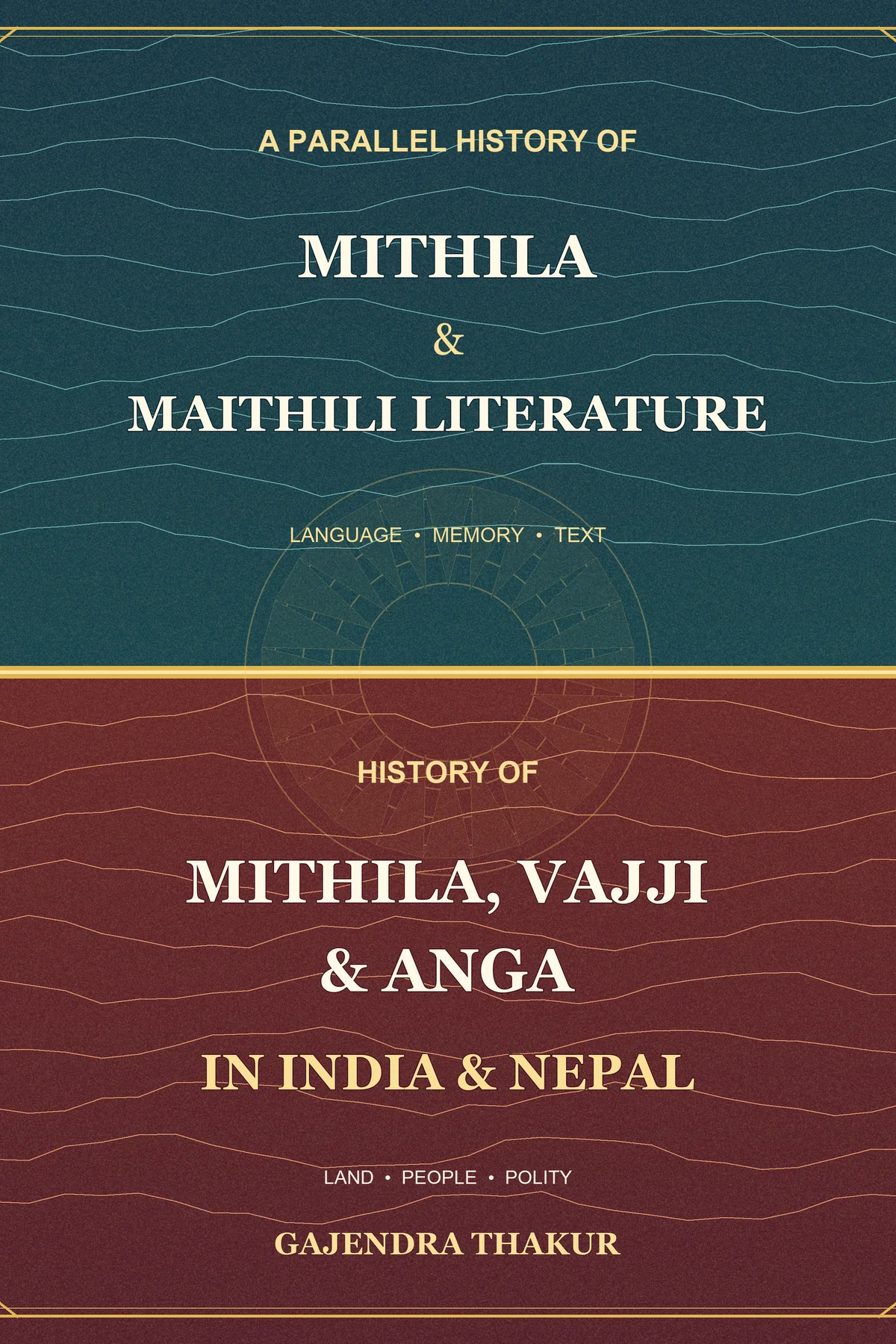
Browse the covers of the histories, Panji studies, philosophical research, and Sanskrit–Maithili translations that sustain this growing digital research environment.
YEAR
Open 550 BCE
Modern reference map locating Kathmandu, Simraungadh, Janakpur, Darbhanga, Vaishali, Purnia, Patna and Bhagalpur

Editorial map from Work I (2026) · Natural Earth / GeoNames · no ancient or medieval frontier is implied

Ancient

8 chronological anchors

Open the 160-record cited source register

THE VIDEHA RESEARCH ECOSYSTEM

History joined to genealogy, literature, and philosophy

REGIONAL HISTORY

Political and connected history in 28 chapters; socio-cultural-economic history complete across all 150 supplied chapters, for 178 permanent History chapters in the connected archive.

PANJI RESEARCH

Genealogy, kinship, village networks, archival notation, social memory, and the ethical reading of difficult records.

PARALLEL RESEARCH

A complete 172-idea philosophical architecture—72 ideas in Volume I and 100 in Volume II—together with the 100-volume Parallel History of Mithilā and Maithilī literature.

TEXTS & TRANSLATIONS

Four major works within a living Maithili intellectual tradition.

EDITORIAL CREDIT & FOUNDATIONS

A Videha scholarly project

© Gajendra Thakur, Editor, Videha Maithili eJournal · ISSN 2229-547X

This site is based on the following books and translations by Gajendra Thakur: