Political and connected history in 28 chapters; socio-cultural-economic history complete across all 150 supplied chapters, for 178 permanent History chapters in the connected archive.
SOURCE-CONTROLLED REGIONAL ATLAS
Explore Mithila, Vajji and Anga
A guided entrance to the Videha archive: genealogy, regional history, philosophical debate, texts, and translation across India and Nepal. Choose a research question first; the archive will then lead you to the relevant evidence, chapter, or tool.
FROM THE VIDEHA LIBRARY · A LITERARY ATLAS
Preeti Thakur & Gajendra Thakur
प्रीति ठाकुर आ गजेन्द्र ठाकुर
Picture stories, literature, translation and manuscript archives—with an English criticism reading room.
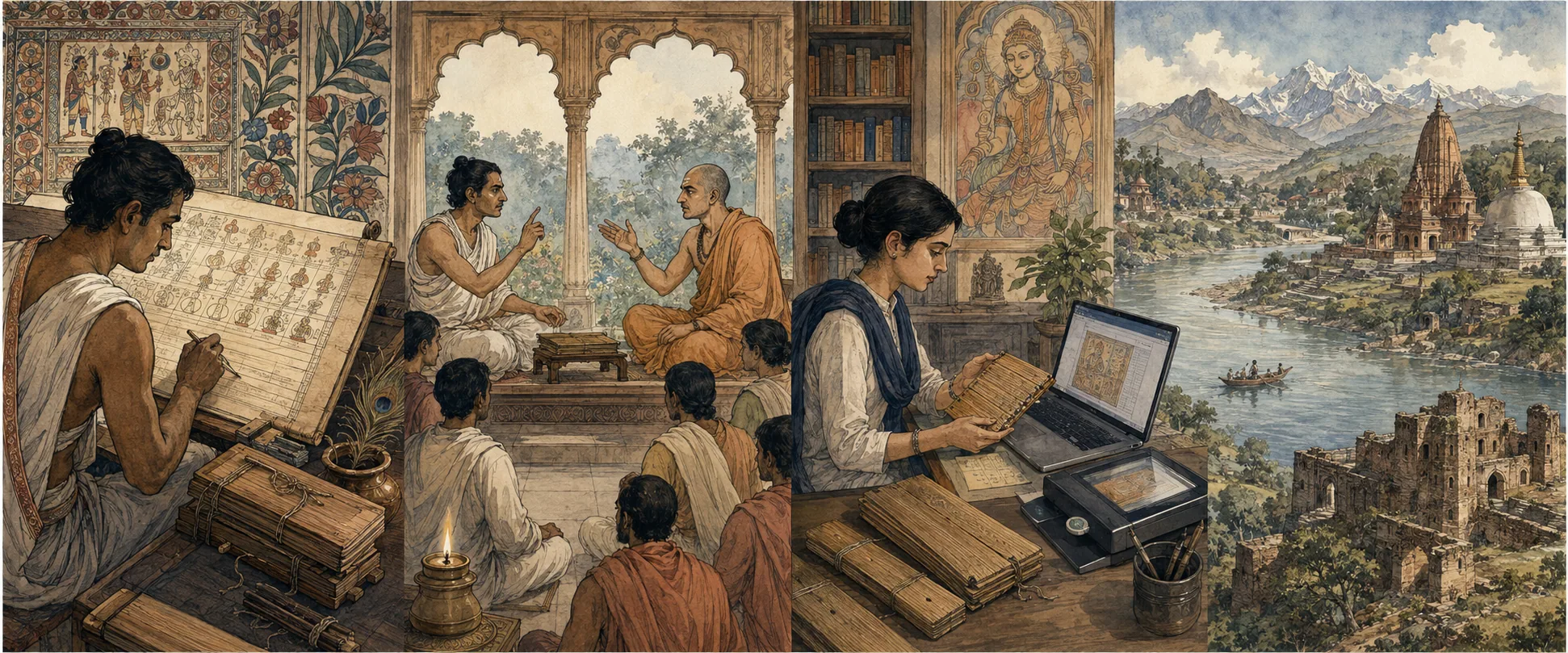
THE VIDEHA RESEARCH STUDIO
Four doors into one archive
Choose the question closest to yours. Each door leads to specialist tools without requiring you to understand the archive’s full structure first.
ONE SEARCH · THE WHOLE ARCHIVE
Find a person, place, text, chapter, or idea
Try “Vidyapati”, “Vaiśālī”, “Panji”, or “Nyāya”. Results open in the relevant research path.
Ctrl K
A LIVING, SOURCE-CONTROLLED ARCHIVE
Clear about what is complete—and what comes next
- History
- 178 out of 178 completed
- Ideas
- 172 out of 172 completed
- Last updated
Count key: 178 histories and 172 ideas are editorial chapter catalogues. The Knowledge Graph counts a different unit—880 searchable nodes, including 244 idea nodes made from debate chapters and extracted comparison concepts. “People” and “figures” both refer to the same 138-record biographical index.
Read the changelog and roadmapSPECIALIST RESEARCH ROOMS
Map, graph, multiscript reader and classroom load when needed
This gateway keeps the initial archive lightweight. The complete specialist corpus is preserved and opens automatically as you approach it or select a specialist-room link.
THE VIDEHA LIBRARY
The books behind the archive
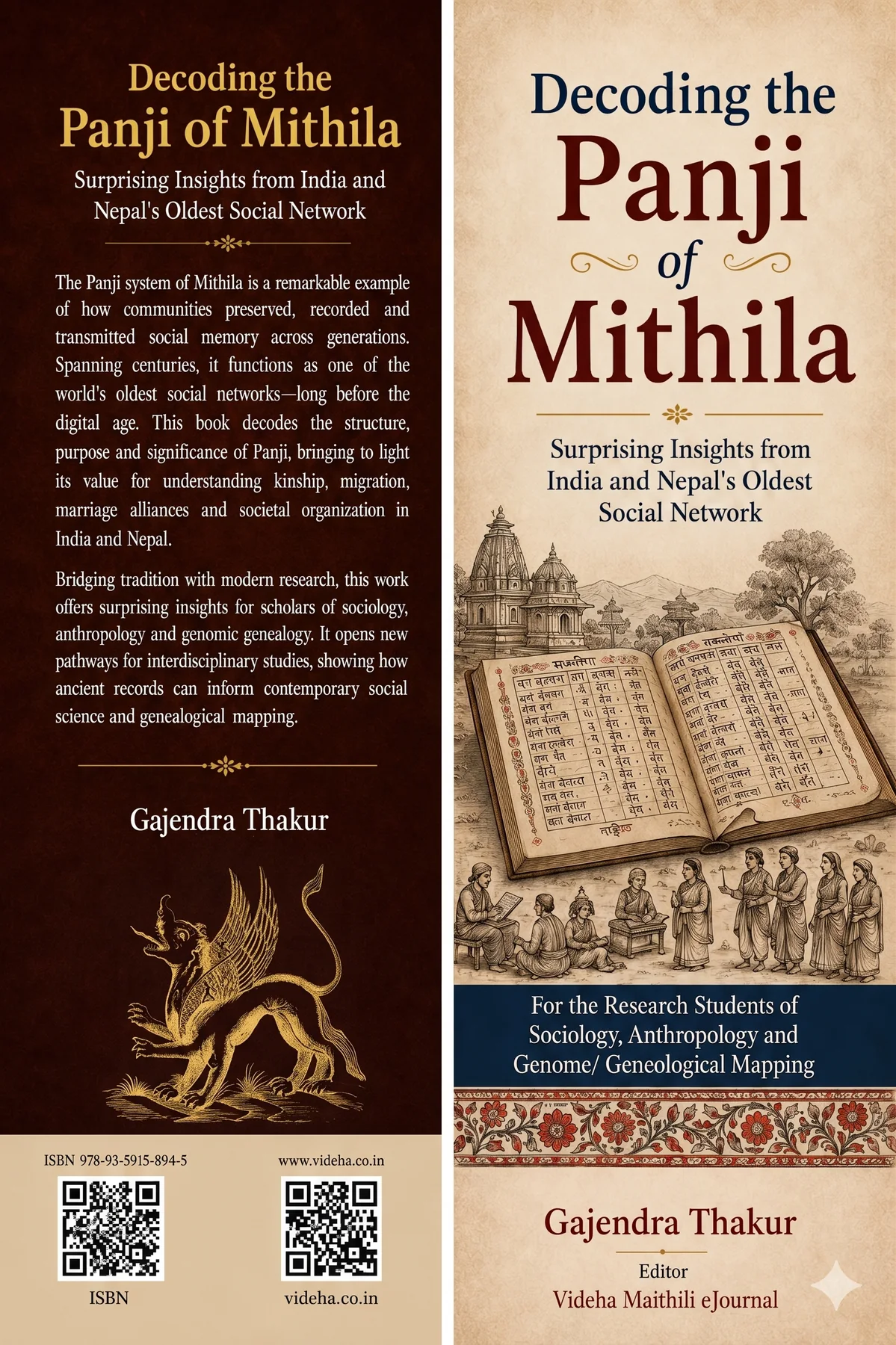
Browse the covers of the histories, Panji studies, philosophical research, and Sanskrit–Maithili translations that sustain this growing digital research environment.
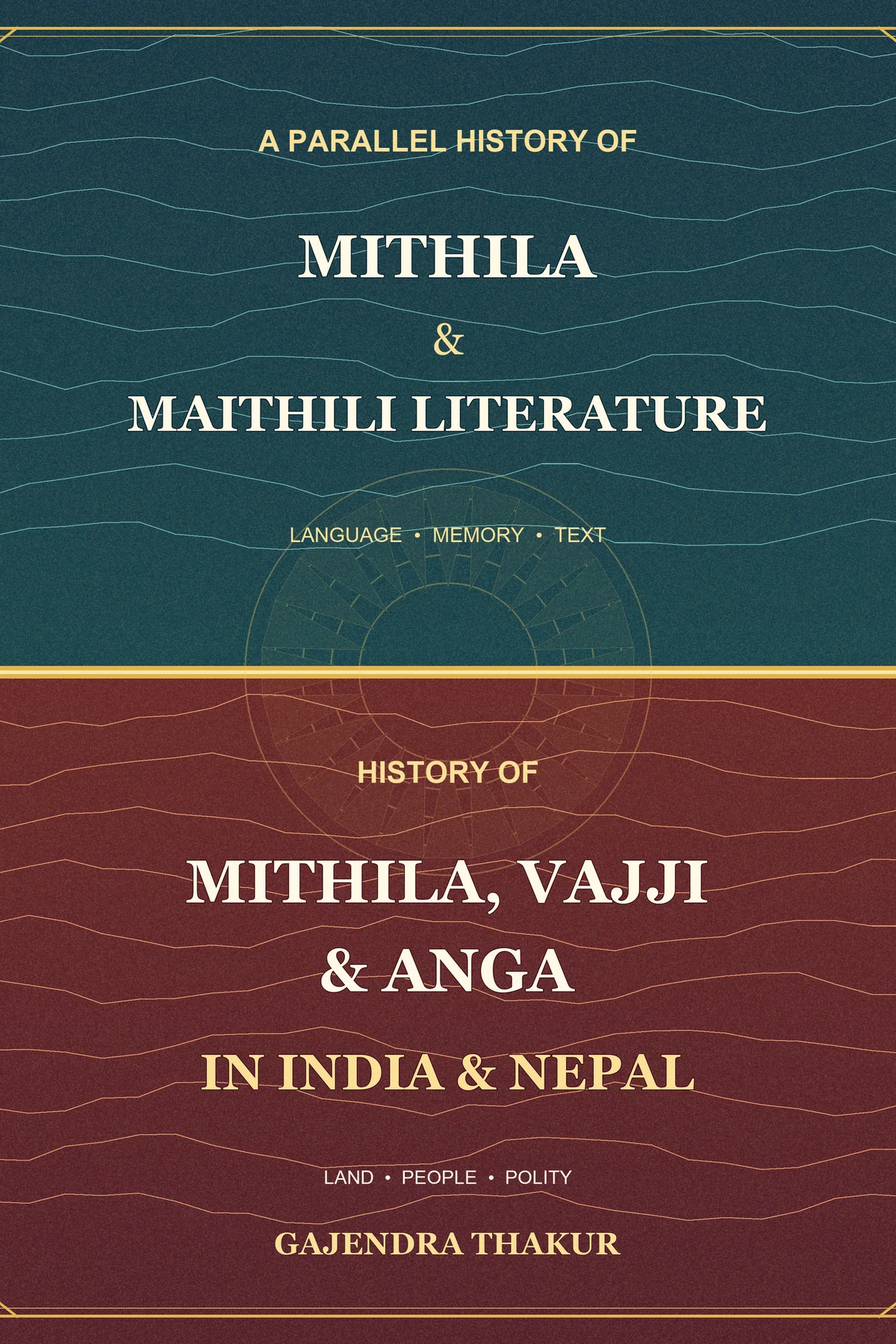
A History of Mithila, Vajji and Anga
Regional history
Cover 01 of 23 · 23 images total
YEAR
Open 550 BCE 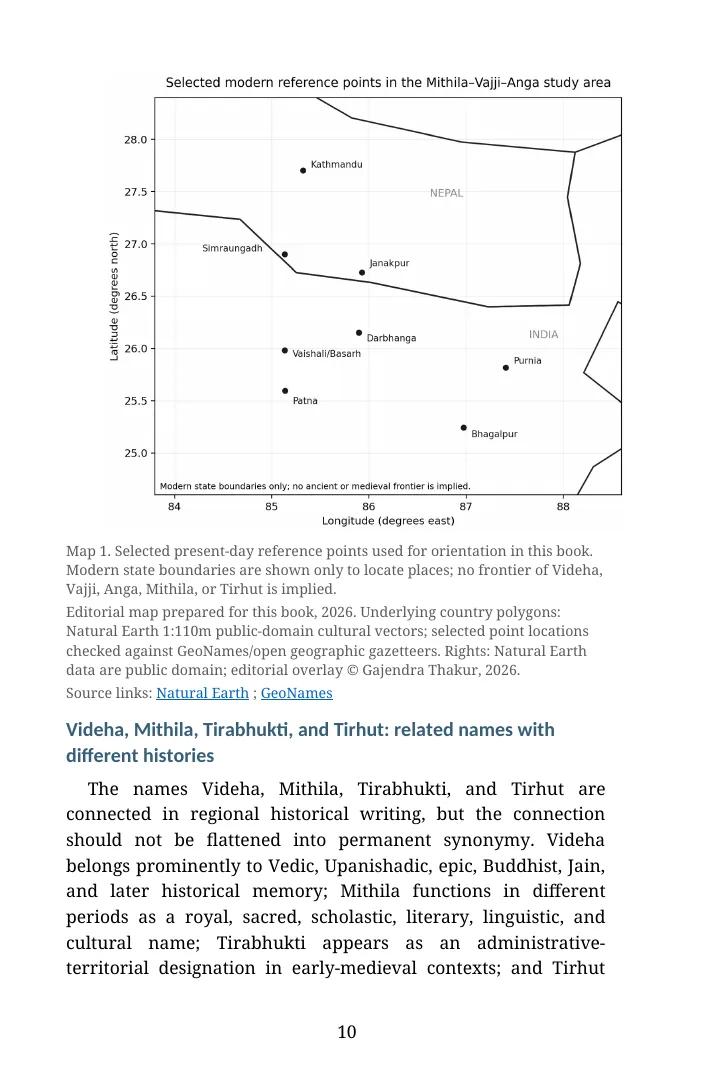
Editorial map from Work I (2026) · Natural Earth / GeoNames · no ancient or medieval frontier is implied
Ancient
Open the 160-record cited source register8 chronological anchors
THE VIDEHA RESEARCH ECOSYSTEM
History joined to genealogy, literature, and philosophy
Genealogy, kinship, village networks, archival notation, social memory, and the ethical reading of difficult records.
A complete 172-idea philosophical architecture—72 ideas in Volume I and 100 in Volume II—together with the 100-volume Parallel History of Mithilā and Maithilī literature.
Four major works within a living Maithili intellectual tradition.
EDITORIAL CREDIT & FOUNDATIONS
A Videha scholarly project
© Gajendra Thakur, Editor, Videha Maithili eJournal · ISSN 2229-547X
This site is based on the following books and translations by Gajendra Thakur: